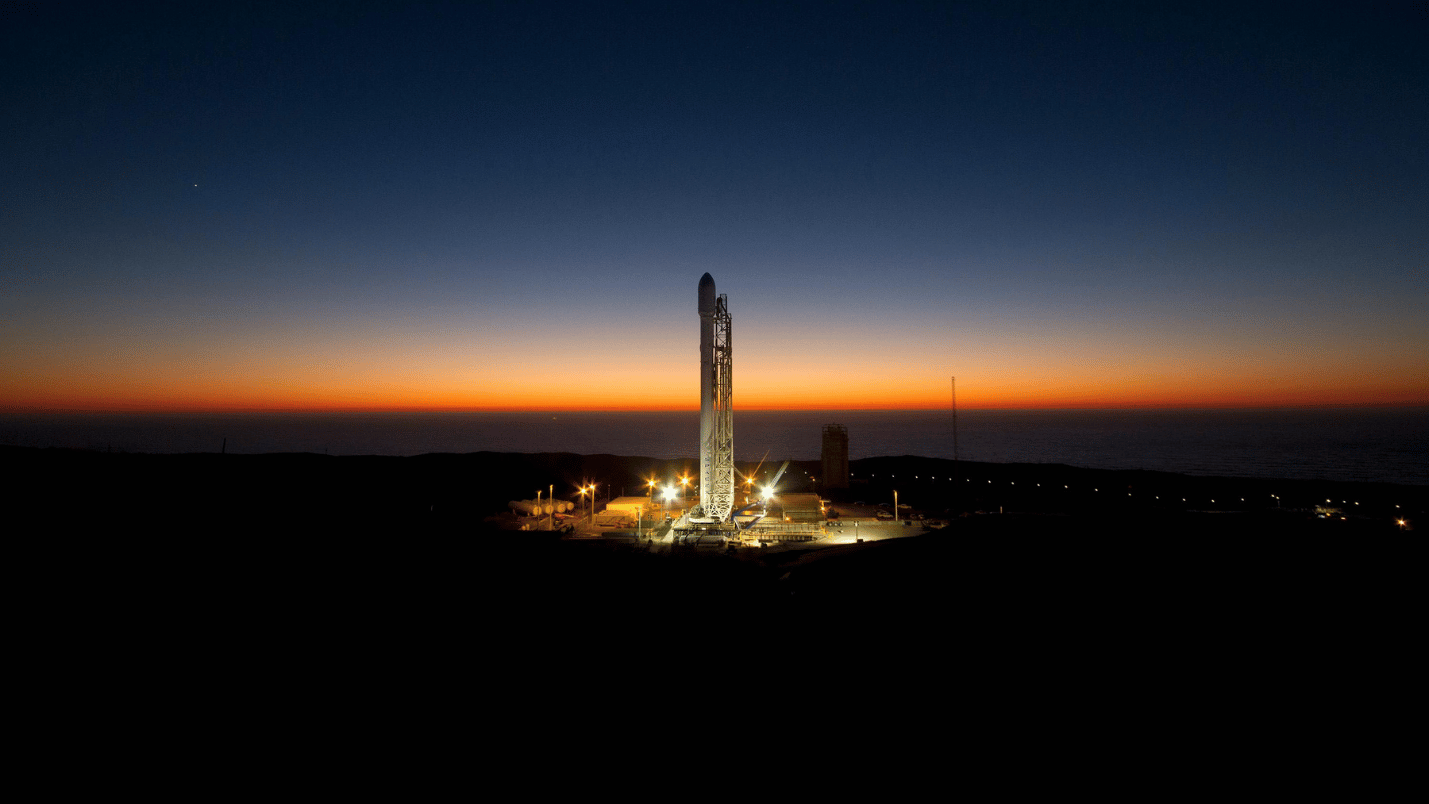
The aerospace sector is experiencing a moment of unprecedented acceleration. Globally, the space economy already exceeds $630 billion and is expected to reach $1.5 trillion in 2025, according to Deloitte. This growth is driven both by space exploration and satellite technologies, as well as by defense and critical communications.
Within the aerospace umbrella, the New Space subsector is shaping up to be one of the main protagonists of the next decade. This concept encompasses the new space economy based on agile startups, the development of nanosatellites, reusable rockets, services based on satellite data and, on an ever-closer horizon, space tourism. Compared to the traditional model, dominated by large agencies and state contracts, New Space opts for faster, more sustainable, demand-oriented commercial solutions. VDS 2025 will dedicate a specific space to analyzing how these trends are transforming value chains, generating new investment opportunities and attracting talent to a global market that continues to grow. An approach already visible in the international startup competition of the leading tech event in Europe. Of the 10 finalists, five are related to this field.
With this context, VDS 2025 will pay special attention to this sector as a strategic axis of this international gathering, and will boost debate, inspiration and business around the aerospace industry.
A sector expanding worldwide
Global advances show how space is becoming a key ground for innovation, business competitiveness and geopolitics. The space race is no longer science fiction: it is economy, security and international cooperation.
From east to west, many countries are accelerating their commitment to the aerospace sector. For example, the European Union seeks to reduce its dependence on third countries with the inauguration of its own spaceport, capable of launching satellites and testing new orbital technologies. This is the Esrange Space Center, in the heart of the Arctic Circle.
This European commitment to the conquest of space has also been seen at Paris Air Show. The fair, usually focused on aviation, devoted a priority space this year to the space sector: next-generation satellites, lunar and Martian exploration and dual-use technologies (civil and military).
Meanwhile, China is trying to position itself in the commercial aviation sector with Comac C919, an aircraft designed and assembled in the country with a view to competing directly with the Boeing 737 MAX and the Airbus A320; without neglecting the space sector, where the country has increased its investments.
India is also consolidating itself as a space power, with milestones such as the Chandrayaan-3 landing, the hundredth launch by ISRO and the orbiting of the satellite NISAR together with NASA, capable of monitoring climate change and agriculture with great precision. The government plans to build its own space station by 2035 and achieve a human lunar landing in 2040, while a growing startup ecosystem drives the innovation and economic return of the sector, consolidating the country as a key player in the new space race.
Another international cooperation is that of Japan and the United States. Their respective space agencies, JAXA and NASA, signed an agreement to promote sustainable lunar exploration: Japan will design, develop and operate a pressurized lunar rover, while NASA will be responsible for its launch and delivery to the Moon, in addition to offering two opportunities for Japanese astronauts to travel to the lunar surface.
Spain, a growing industry
The international panorama confirms that space is no longer the exclusive domain of a few powers. Our country, with its growing industry and an expanding startup ecosystem, is in a solid position. And within Spain, the Valencian Community is emerging as a key hub, with technology validation projects, industrial clusters and companies aiming at crewed missions and heavy launchers.
According to Invest in Spain, the Spanish aerospace sector generated in 2023 a volume of €13.9 billion, with 15% year-on-year growth. With more than 215,000 direct and indirect jobs and 59% of sales coming from exports, Spain is consolidating itself as one of the European industrial pillars.
The latest milestone in this regard is the commissioning of the military satellite SpainSat NG I. It is a system that will provide more secure communications both to the Spanish Armed Forces and to allied countries and NATO, which will replace Xtar-EUR, a veteran with more than 20 years in orbit.
At the beginning of 2025, ITP Aero, a world-leading manufacturer of components and systems for the aerospace industry, specialized in the design, development and maintenance of aeronautical propulsion systems and components for commercial aviation and defense, inaugurated an advanced aerospace manufacturing center (ADMIRE) in Zamudio (Bizkaia).
To unify all the space policies of our country and effectively coordinate all the services and activities in the sector to guarantee the strategic action of the Government of Spain in the space field, our country launched in 2024 the Spanish Space Agency (AEE). In its first year alone, the entity injected more than €156.8 million for technology projects.
In addition, it is expected that by the end of 2025 our country will have 7 BIC centers of the European Space Agency (ESA) to promote innovation, business development and technology transfer in the field of space technologies.
Meanwhile, the Valencian Community is beginning to stand out as an international benchmark aerospace hub. The potential of the Valencian innovation ecosystem, due to the combination of a solid technological infrastructure, qualified talent, a robust industrial supply chain and a favorable environment for innovation, positions the region as a major magnet for the development and investment of aerospace projects.
With the challenge of developing a strategic plan that will drive the growth and investment of the aerospace sector in the Valencian Community through different areas of action, the cluster Espai Aero CV was born, with 25 entities, from companies and technology centers to universities.
Also, to join forces between entities, in 2010 the Valencian Space Consortium – Val Space Consortium was created. Formed by the Generalitat Valenciana, the Ajuntament de València, the Universitat Politècnica de València and the Universitat de València-Estudi General, the VSC carries out scientific research activities and technology development services in any area of activity related to the space sector, including the increase in safety and production quality of space systems.
Recently, the VSC has been consolidated thanks to the five-year renewal of the collaboration agreement between the Generalitat Valencia and the European Space Agency. This agreement strengthens the work of the specialized laboratories of the consortium, which have already carried out more than 600 tests in programs such as Galileo or Sentinel, and has surpassed 28,000 hours of testing of space technologies. In addition, new initiatives are being promoted, such as the ESA-BIC incubator in Castellón, the aerospace sector table, support for the company PLD Space and leadership in urban drone projects.
The Valencian Community is also committed to the future of talent. The Space Camp 2025, co-led by PLD Space with support from NASA and ESA, is emerging as the most advanced space camp in Spain. It offers workshops inspired by real missions, bringing space engineering closer to young people.
Startups competing for the future of space
The VDS Startup Competition will also showcase the strength of New Space through its finalists. In the early stage category, Spherical (Netherlands) is designing semiconductors for aerospace electronic systems, Spacebackend (Luxembourg) is accelerating satellite payload integration to enable faster missions, and Latitudo 40 (Italy) is applying satellite imagery to deliver geospatial intelligence for decision-making across industries.
In the growth stage, two Spanish companies stand out: Arkadia Space, based in Castellón, which develops green propulsion systems, will go head-to-head with Kreios Space, specialized in electric propulsion for satellites. Together, these projects illustrate how startups from across Europe are pushing the boundaries of technology and consolidating New Space as one of the most dynamic fields within the global aerospace sector.
A constellation of startups
The consolidation of Spain and the Valencian Community as emerging players in the aerospace sector is thanks, in part, to an ecosystem of innovative startups. Among them, PLD Space, headquartered in Elche (Alicante, Valencian Community), stands out, a pioneer in the development of reusable rockets for orbital and suborbital launches. Also from the Valencian Community, in Castellón, Arkadia Space operates, specialized in green space propulsion systems, a key technology for reducing the environmental impact of missions. These two Valencian companies represent a fundamental engine of the so-called Spanish New Space, by promoting both access to space and sustainable solutions for the industry.
Alongside them, initiatives such as Sateliot, which is developing a constellation of nanosatellites to offer IoT connectivity worldwide; Open Cosmos, focused on democratizing access to space through platforms for the design, manufacture and operation of satellites; UARX Space, which works on orbital transport and deployment systems; and Ienai Space, dedicated to electric propulsion for small satellites, stand out. All these startups, together with those in Valencia, make up a dynamic and expanding panorama that places Spain as a European benchmark in next-generation space solutions.
The protagonists of space at VDS
The event will feature top-level leaders who will share their experience in investment, innovation and space technology development. Among the speakers already confirmed are Orfeo Balboa, Investment Manager at First Drop VC and Coordinator of ESABIC Valencia Region, who will address the role of financing in the creation and scaling of space startups. Ezequiel Sánchez, Executive President of PLD Space, the Spanish company leading the development of reusable rockets in Europe, will also participate to explain how its technology opens the door to more sustainable and competitive launches. Pepe Nieto, Corporate Relations Director at COMET Aerospace and President of ESPAI AERO CV.
CEO of COMET Ingeniería, will contribute his vision on the design and advanced manufacturing of aerospace systems. Francesc Coello, CEO of Nerva Technologies, will highlight new developments in aerospace technologies, Daniel de los Reyes, Chief Technology Officer at S2, will add a perspective on scalable tech solutions, and Francho García, CEO and Co-founder of Arkadia Space, will showcase how his company is reimagining propulsion for the New Space era. Their talks will serve to inspire and generate debate around the business opportunities offered by this rapidly expanding industry.

Related posts


Become a sponsor or exhibitor
Connect with the global tech ecosystem, increase your visibility, and generate high-value leads through curated meetings with partners, clients and decision-makers.
Become a sponsor or exhibitor
Connect with the international tech ecosystem, increase your visibility and grow your business by meeting new partners, clients and hundreds of potential prospects.