
Health is probably one of the greatest concerns any person will face throughout life. It is the most valuable asset at an individual level and one of the largest areas of expenditure at a collective one. And yet, for years, venture capital and the startup driven technology wave approached this sector with a certain degree of caution.
That was no coincidence. Traditional healthtech had a profile that was not especially attractive to a large part of venture capital: long sales cycles, complex regulation, slow moving institutional buyers, demanding validation processes, and a much less immediate path to scale than in other digital verticals. While in other industries a startup could go from zero to millions of users in just a few months, in healthcare it first had to prove to an ethics committee, a regulator, a hospital or a healthcare system that the solution was safe, effective and capable of being integrated.
But that landscape has changed substantially.
Healthtech has repositioned itself as an investment grade industry of enormous quality. We are talking about companies with measurable value propositions, high barriers to entry once clinical validation has been achieved, and valuations that have historically been more disciplined than in other technology categories. In other words, less noise and more substance.
A first rate accelerator has also entered the equation: artificial intelligence. AI does not just improve processes in healthcare. It is beginning to fundamentally transform how clinical information is interpreted, how tasks are automated, how patients are supported and how diseases are detected earlier. Medical imaging, chronic care management, administrative burden reduction, clinical data interoperability and predictive medicine are already areas where technology is no longer just a promise, but is becoming infrastructure.
The clearest sign of this shift is what we are seeing in 2026, with major technology companies moving decisively into the sector. OpenAI has launched ChatGPT Health, a dedicated experience for health and wellness. Amazon has introduced Health AI by One Medical, offering personalized guidance based on medical history. Anthropic has rolled out Claude for Healthcare, aimed at providers, payers and healthcare companies. And Google continues to advance MedGemma as one of its most relevant open model families for developers building healthcare solutions. Big Tech’s move into health is not just a product bet. It is a statement of intent about where one of the next major frontiers of digital business lies.
Within this new landscape, Valencia is beginning to consolidate itself as an increasingly serious node within European healthtech. Not through sheer volume or grandstanding, but through a particularly valuable combination of applied research, knowledge transfer, talent, startups with real use cases and capital with increasingly sophisticated theses.
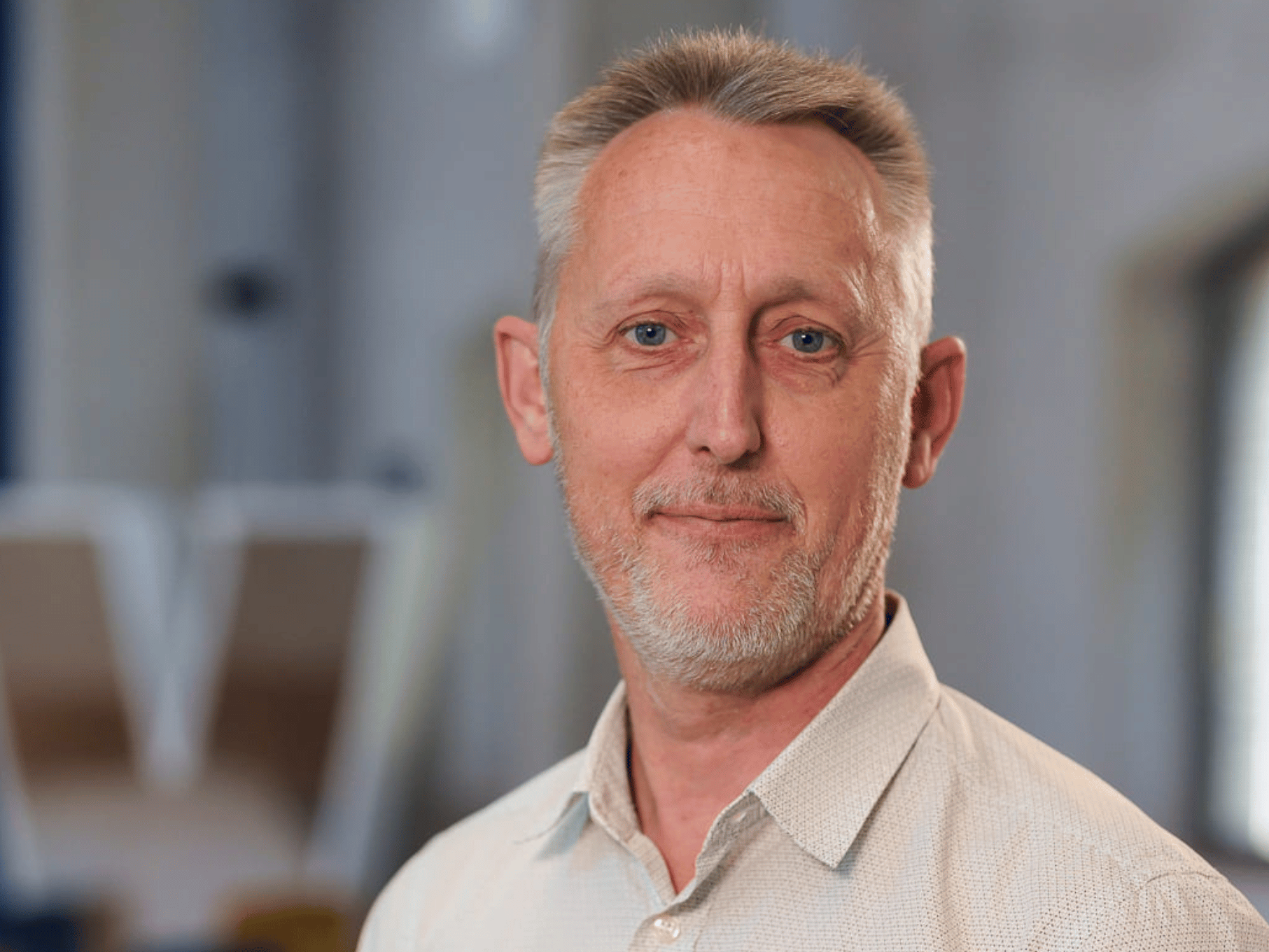
To better understand the current moment in the sector and its potential, we spoke with Pablo Perea, Head of Investments at GoHub Ventures. We also look at some of the Valencian startups that best explain why the city is gaining weight in this vertical.
A sector with its own logic for investors
The Valencia based fund GoHub Ventures saw this shift coming several years ago, following a deliberate process of thesis building and market analysis. “Our thesis in digital health is focused on AI, preventive health and early detection,” Perea explains.
That thesis has not remained at the level of discourse. It has translated into investment. In recent cycles, GoHub has increased its exposure to the sector through companies such as Aeon, OpenHealth, Quibim and, already in 2026, Oska Health. That is especially revealing because it confirms something important: healthtech is no longer a secondary vertical. It has become a central category within the capital allocation strategies of those who understand where technology with real impact is heading.
What does an investor see in healthcare today that they may not find in other sectors?
First, a return that is far more measurable than is sometimes assumed. Reducing administrative burden, optimizing operating rooms, accelerating diagnoses, improving treatment adherence or avoiding unnecessary tests all produce outcomes that can be quantified in time, efficiency and cost. When a company proves impact in one of those areas, it stops being an interesting story and starts becoming a serious asset.
Second, the sector forces startups to arrive better built. In healthtech, a brilliant demo is rarely enough. Founders need to understand the clinical workflow, the regulatory fit, who validates, who pays, who implements and who ultimately benefits. That level of demand slows the path, yes, but it also filters much more effectively. Once a company gets through that phase, it often becomes a much more robust opportunity.
Third, valuations have tended to be more conservative than in other technology categories. And for investors, that matters a great deal. It allows them to enter companies with real barriers and high potential without paying inflated multiples driven by narrative alone.
Europe has already taken notice
At the European level, healthtech is also sending clear signals of maturity. Galen Growth’s HealthTech 250 has become one of the benchmark references for identifying the ventures with the strongest potential in the sector. In its most recent editions, the firm has emphasized a growing mix of funding momentum, partnership capacity and operational sophistication, reflecting a key reality: in healthcare, the winners are not only the companies with the best technology, but the ones that manage to integrate into the system.
Major international success stories also help explain the sector’s new momentum. One of the most visible is Oura, the Finnish company specializing in biometric monitoring, which in 2025 was reported to be raising roughly $875 million to $900 million at a valuation close to $11 billion, consolidating its position as one of the leading global names in connected health.
The major challenge: having a great product is not enough
There is a trap many healthtech startups with solid technology fall into: mistaking an impressive demo for a real business.
Perea sums it up clearly. The main bottleneck is usually not building a useful tool, but getting the system to adopt it, buy it, integrate it and scale it for real. And in healthcare, that is never trivial.
Sales cycles are long. Decision makers are multiple. Clinical and economic validation is demanding. Operational integration within hospitals, insurers or care networks is usually far more complex than it appears from the outside. On top of that comes the regulatory dimension, especially intense in Europe, where each market has its own pace, criteria and entry points.
But that is precisely where part of the sector’s value lies. Because that difficulty, once overcome, becomes a barrier to entry. And in healthtech, barriers to entry matter far more than superficial speed.
That is why, when a startup wants to raise capital in this environment, the investor no longer looks only at the technology. They look for real founder market fit, deep understanding of the clinical problem, a credible regulatory roadmap, well scoped timelines and costs, and partnerships with hospitals, universities or strategic players that provide validation.
Valencia: from isolated cases to critical mass
Talking about healthtech in Valencia today is no longer about an exception or an anomaly within the entrepreneurial ecosystem. It is about an environment that is beginning to build recognizable critical mass.
We are not yet at the point where it would be reasonable to claim that Valencia leads Europe in this vertical. But we are looking at an increasingly solid, visible and connected base. There is science with real clinical application. There are startups capable of competing in complex niches. There are hospitals and research centers that can act as validation environments. And there is a local investor community that is beginning to understand much better how to read these assets.
That does not guarantee automatic leadership. But it does create the conditions for something much more important: for relevant healthcare companies to stop being isolated success stories and start becoming part of a pattern.
The Valencian startups that best explain this moment
Quibim is probably the most visible healthtech case in Valencia today. The company uses artificial intelligence to extract imaging biomarkers and generate clinically relevant information from MRI scans, CT scans and other medical tests. In January 2025, it announced a $50 million Series A round, one of the most relevant in Southern Europe in AI applied to healthcare. The deal accelerated its international expansion and reinforced a positioning that already places it among the global references in the field, with Valencian roots.
ARTHEx Biotech, a spinout linked to the Valencian scientific ecosystem, is developing targeted RNA therapies for rare neuromuscular diseases. In September 2025, it expanded its Series B to $87 million, reinforcing the global clinical development of its lead program for myotonic dystrophy type 1. Its trajectory places Valencia in a particularly valuable category: companies capable of competing from proprietary science in international markets of extreme complexity.
MYSPHERA has spent years addressing one of the most concrete and costly problems any hospital faces: operational efficiency. Its technology improves the real time coordination of patients, teams and operating rooms. The company has communicated improvements pointing to increases of more than 16% in surgical activity, along with additional gains in patient and staff experience and operating room performance. That value proposition is especially relevant at a time when healthcare systems need to do more with the same resources. You can see part of that approach here and here.
Corify Care has developed a non invasive cardiac mapping technology that enables real time visualization of the heart’s electrical activity and improves precision in the diagnosis and treatment of arrhythmias. In 2024, it announced total funding of €6 million, combining private investment and public support, to accelerate its expansion in Europe and prepare for entry into the United States. It is one of those companies that captures the very best of healthtech: clinical complexity, proprietary technology and direct application to a clearly defined medical need.
PhysioMRI represents another of the ecosystem’s most promising lines of development: the democratization of advanced medical equipment. Its proposal focuses on more accessible and portable MRI systems, with the potential to expand access to this technology beyond traditional high capex models. Beyond specific funding figures, it is a strong example of the kind of innovation that can emerge when engineering, clinical need and market ambition align. The company has also continued validating its technology in hospital environments such as La Fe Hospital.
On the corporate side, one of the biggest success stories associated with the Valencian environment remains Igenomix. The company established itself as an international reference in reproductive genetics and was acquired by Vitrolife in 2021 at an enterprise value of €1.25 billion. Beyond the figure itself, its trajectory shows that this ecosystem is also capable of building healthcare companies with truly global scale.
What still needs to be built
The Valencian technology ecosystem has a combination that very few territories bring together so organically: research with clinical application, hospitals with validation capacity, competitive technical talent, startups with real use cases and local capital with growing interest in the sector.
But the most immediate challenge remains the same one that defines healthtech worldwide: adoption.
It is not enough to generate excellent technology. The healthcare system has to buy it, integrate it and scale it. Scientific transfer to market has to accelerate. Public and hospital procurement needs to become more agile. And the ecosystem also needs more patient capital willing to support long processes without imposing consumer software expectations where they simply do not apply.
What does seem clear is that the moment is now. Big Tech has put health firmly in its sights. AI is accelerating the sector’s transformation. European capital is following the signal. And Valencia is beginning to gather enough companies, institutions and funds to turn that global momentum into a recognizable specialization.
The opportunity is no longer just to celebrate the cases that already exist. It is to create the conditions for them to stop being exceptions and start becoming part of a broader, stronger and more ambitious story about what this ecosystem can become.

Related posts


Become a sponsor or exhibitor
Connect with the global tech ecosystem, increase your visibility, and generate high-value leads through curated meetings with partners, clients and decision-makers.
Become a sponsor or exhibitor
Connect with the international tech ecosystem, increase your visibility and grow your business by meeting new partners, clients and hundreds of potential prospects.